Book Club

The next selection for the Pember Book Club is Emily Dickinson, her letter to the world by Polly Longsworth dickinson

KIRKUS REVIEW says:

Emily Dickinson is a personality with a special attraction for adolescents. Her poems require little experience to scan, and once read retain their fascination by the elusive inscrutability of the message coupled with the simplicity of the images. Her own life enhances this interest. She was a woman who never seems to have grown old, and the mystery of her seclusion is totally romantic. Despite the absence of any specifically juvenile biographis of Emily Dickinson, teenagers are probably more familiar with the framework of her life than they are with many poets who have been popularized for the young. To fill the gap, if there truly is one, the author has managed very well in overcoming the difficulties involved. The thesis is that “”Emily Dickinson’s `letter to the world'”” was “”a testimonial of rejoicing to that incredible quality called life.”” Just how she bridged the paradox of her voluntary separation from the world to a concentration on the essences of life leads to endless speculation, and in this book theorizing has necessarily been limited. The way is left open, however, for readers to continue wondering. The known influences have been fairly presented here — her family ties, the people she looked to for guidance, the two men that she clearly fell in love with, her Boston upbringing, her education, her religious struggles. The book is smoothly written and very readable. Her poetry is excerpted where it is illustrative of the life of the poet; it is not analyzed separately. The only drawback to the otherwise meticulously careful narrative is the occasional dramatization of events that could have been portrayed by quoting letters.

Pember Board Meeting

A meeting of the Board of Trustees of the Pember Library and Museum will be held on the third Wednesday of each month at the Pember. This is a regular meeting and open to the public.

Book Club

61o3zDpDrBL._AA300_

from GoodReads:

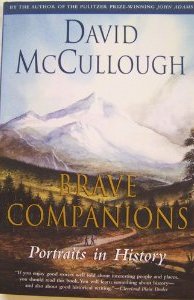
The bestselling author of Truman and John Adams, David McCullough has written profiles of exceptional men and women past and present who have not only shaped the course of history or changed how we see the world but whose stories express much that is timeless about the human condition. Here are Alexander von Humboldt, whose epic explorations of South America surpassed the Lewis and Clark expedition; Harriet Beecher Stowe, “the little woman who made the big war”; Frederic Remington; the extraordinary Louis Agassiz of Harvard; Charles and Anne Lindbergh, and their fellow long-distance pilots Antoine de Saint-Exupary and Beryl Markham; Harry Caudill, the Kentucky lawyer who awakened the nation to the tragedy of Appalachia; and David Plowden, a present-day photographer of vanishing America. Different as they are from each other, McCullough’s subjects have in common a rare vitality and sense of purpose. These are brave companions: to each other, to David McCullough, and to the reader, for with rare storytelling ability McCullough brings us into the times they knew and their very uncommon lives.

Closed

The Pember Library will be closed today because of the winter storm.snow_in_window

Holiday Hours

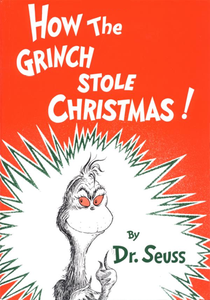
The Pember Library will be closed December 22 through December 25.

We will have regular hours December 26-28 and be closed December 29-January 1.210px-how_the_grinch_stole_christmas_cover

Closed

The library closed early today because of inclement weather and poor road conditions. We apologize for any inconvenience.

Book Club

Ecology of a Cracker Childhood by Janisse Ray will be up for discussion at December’s book club meeting.

196714

Goodreads says:

Janisse Ray grew up in a junkyard along U.S. Highway 1, hidden from Florida-bound vacationers by the hedge at the edge of the road and by hulks of old cars and stacks of blown-out tires. Ecology of a Cracker Childhood tells how a childhood spent in rural isolation and steeped in religious fundamentalism grew into a passion to save the almost vanished longleaf pine ecosystem that once covered the South. In language at once colloquial, elegiac, and informative, Ray redeems two Souths. “Suffused with the same history-haunted sense of loss that imprints so much of the South and its literature. What sets Ecology of a Cracker Childhood apart is the ambitious and arresting mission implied in its title. . . . Heartfelt and refreshing.” – The New York Times Book Review.


Pember Board Meeting

A meeting of the Board of Trustees of the Pember Library and Museum will be held on the third Wednesday of each month at the Pember. This is a regular meeting and open to the public.

Thanksgiving Holiday

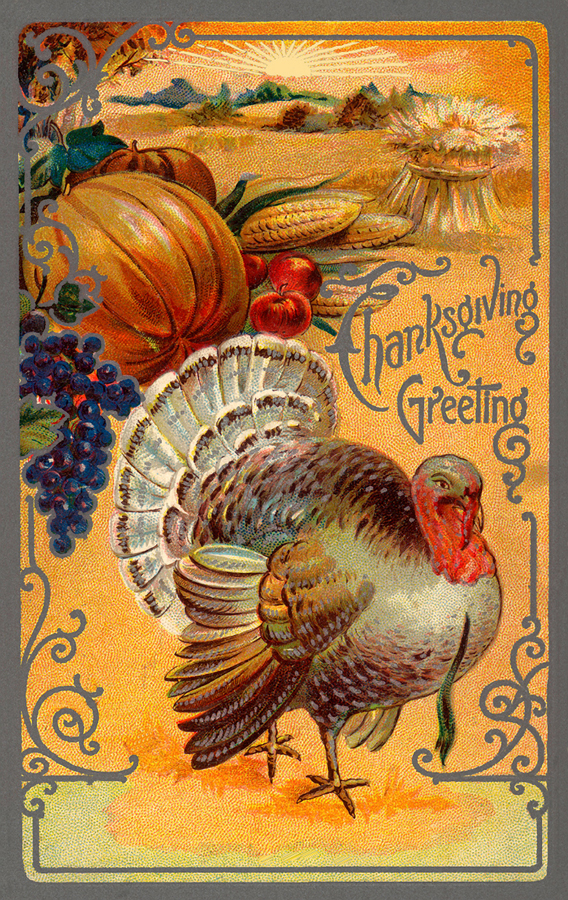
The Library will be closing at 6:00 PM on Wednesday, November 27 and will be closed for Thanksgiving. We will reopen on Tuesday, December 3 at 9:00 AM for our regular hours next week.

Thanksgiving card

Protect Yourself: Cyber Crime Prevention Tips

Today’s world is more interconnected than ever before.  Yet, for all its advantages, increased connectivity brings increased risk of theft, fraud, and abuse.  Week four of National October Cyber Security Awareness Month highlights how people can protect themselves against cyber crime and how to get help.

What Can Be Done to Avoid Becoming a Victim of Cyber Crime?

1.         Secure your computer. If your computer does not have proper security controls, it is vulnerable to access by criminals, who may be able to steal information stored on it.  Make sure your computer has the latest security updates installed. Check that your antivirus and antispyware software are running properly and are receiving automatic updates from the vendor. If you haven’t already done so, install and enable a firewall.

2.         Carefully select the sites you visit. Know the site. Know the company. Do not visit a site by clicking on a link sent in an email, found on someone’s blog, or on an advertisement. The website you land on may look just like the real site, but it may be a well-crafted fake.

3.         Never send sensitive or personal information in an email. It may be intercepted and read by criminals. Legitimate businesses will not ask users to send their sensitive personal information through email.

4.         Use strong passwords. Cyber criminals have developed programs that automate the ability to guess your passwords. To protect yourself, passwords must be difficult for others to guess, but at the same time, easy for you to remember. Passwords should have a minimum of eight characters and include upper case (capital letters), lowercase letters, numbers, and symbols. Make sure you use a different password for each of your accounts.

5.         Look Yourself Up. Search engines will help you to do a quick query of your public information. You can also take a proactive approach to set up alerts for search terms of your name. Data service sites have massive amounts of data compiled from a variety of sources, including public records and social networking sites. This data can be used by criminal profilers, and others for any number of purposes, not necessarily intended by the data service providers.

6.         Cleanup your data. Information that is under your control includes your social networking profiles. In addition, there could be information about you on old blog postings, postings on a friend’s web site, an old dating profile, picture sharing account, or any other services that you used but no longer find necessary.

7.         Review your social media accounts. You basically have three options-remove the data, modify the privacy settings, and/or request that the account be deleted. If you are going to request that the account be deleted, be sure to remove all of the data first. Also, request that the account be deleted rather than deactivated.

8.         Be cautious about all communications you receive including those purported to be from “trusted entities” and be careful when clicking links contained within those messages. If in doubt, do not click.

9.         Do not respond to any spam-type emails.

10.        Do not input your information in a pop-up. If you are interested in an offer that you see advertised in a pop-up ad, contact the retailer directly through its homepage, retail outlet, or other legitimate contact method.

Please visit the following sites for additional information and for resources to get help:

*         NYS ITS Cyber Security Tips Newsletters:  http://www.dhses.ny.gov/ocs/awareness-training-events/news/

*         Free security check ups: http://www.staysafeonline.org/business-safe-online/free-security-check-ups/

*         Online scams, small business tools, videos:  http://www.onguardonline.gov/

*         FBI Cyber Crimes Stories: http://www.fbi.gov/news/stories/story-index/cyber-crimes

*         Crime Prevention: http://troopers.ny.gov/Crime_Prevention/Online_Safety/

*         Internet Crime Complaint Center (IC3):   http://www.ic3.gov/default.aspx

*         National White Collar crime Center (NW3C): http://www.nw3c.org/

*         NYS Information Security Breach and Notification Act: http://www.dhses.ny.gov/ocs/breach-notification/

*         FBI Internet Social Networking Risks: http://www.fbi.gov/about-us/investigate/counterintelligence/internet-social-networking-risks

*         Anti-Phishing Working Group (APWG): http://www.antiphishing.org/


From the NYS Office of Information Technology Services Cyber Security Newsletter.