
Due to tomorrow’s forecast of ice in the morning, we have postponed the eReader class until Monday morning at 10:00 AM at the library.
Month: January 2012
Tax Forms
We have basic NYS tax forms available at the library free of charge. We also have a binder with additional NYS forms that you can photocopy at $.15 per scan. (Forms and binder are located on the bottom shelf near the new and 7-day books.) Or you can go to http://www.tax.ny.gov/forms/ to get all NYS forms ($.25 per page if you use our printers and ink).
We do not have Federal tax forms but you can download them from the internet, ($.25 per page if you use our printers and ink). Go to http://www.irs.gov/formspubs/ where you can access and acquire both electronic and print media.
Changes for 2011 NYS taxpayers include:
The NYS tax form IT 150 Resident Income Tax Return (short form) has been discontinued. All full-year New York State residents must now use Form IT-201 to file and pay their taxes.
NYS taxpayers now have three ways to receive their NYS tax refund: debit card (new option), paper check and direct deposit to the person’s bank account. There is a brochure with information on the new debit card near the NYS forms.
Blue and Gold Yearbooks
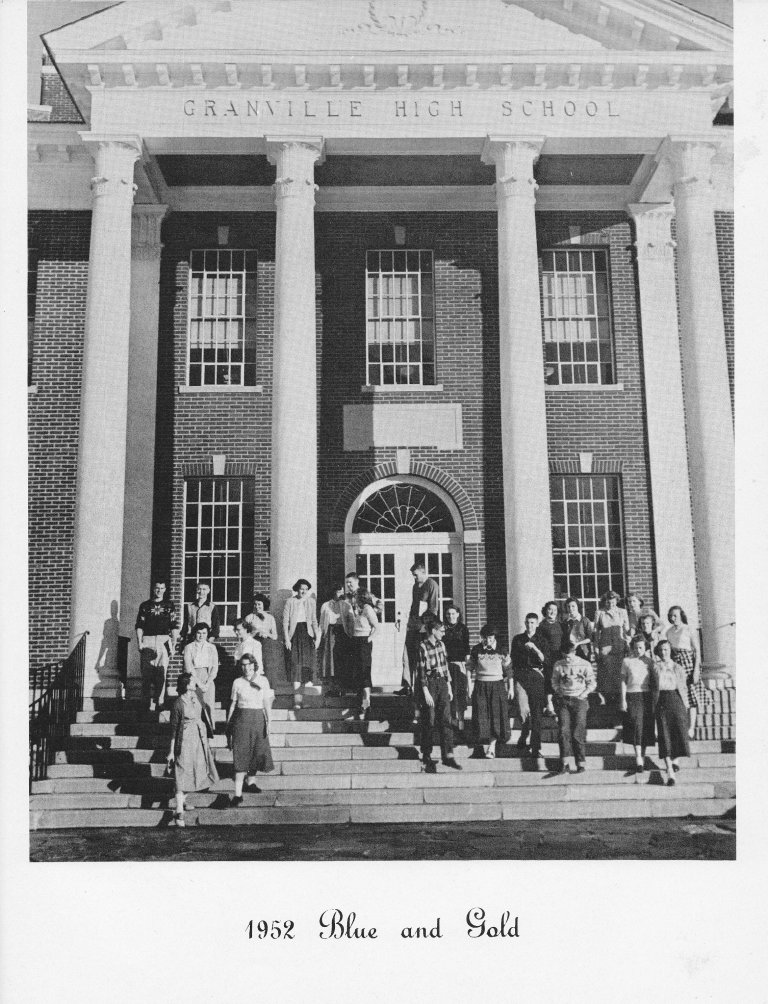
We recently got a contribution of Blue & Gold Yearbooks. There were several that covered years we were missing. There are still a couple of gaps. If anyone has 1954, 2001 and/or 2004 they would complete our collection. It can be fun to look back and see the fashions from days gone by…
Book Club
The book club’s choice for February is Gorgeous East by Robert Girardi.
Kirkus Reviews says:
“[A]n entertaining 21st-century variant on the classic adventure tale. Characterizations are brisk and vivid, as the story whips along toward a violent climax with a nice surprise twist…. Girardi pits the French Foreign Legion against Muslim fanatics. Since Louis Philippe founded the Legion in 1831, its lost-soul volunteers fight in the most desolate corners of the globe mostly because they have nothing better to do with their lives. American musical comedy actor John Smith winds up in the Legion after a disastrous trip to Istanbul that results in the murder of the girlfriend who jilted him for a wealthy Turk. Sous-lieutenant Evariste Pinard, a French Canadian drug dealer and enforcer for a Russian loan shark in France, chose the Legion over prison and deportation. And they’re two of the more savory recruits in Girardi’s nastily realistic rogues’ gallery. Yet it’s such an honor to whip lost souls like these into military shape that only the best of France’s aristocratic officer class, like Colonel Philippe de Noyer, are deemed worthy to serve in the Legion. Unfortunately, Noyer is also possessed of a hereditary tendency toward madness, sparked in his case by a particularly ugly encounter with a fundamentalist Islamic insurgency in the Western Sahara. The creepy Marabouts, who decapitate their enemies and initiate members with bee stings, are mostly an excuse for lots of action sequences featuring vastly outnumbered Legionnaires grimly holding strongholds soon to be overrun by bloodthirsty savages, or charging into hordes of similar savages crying “à moi la Legion!”–
Chocolate, Chocolate, and More Chocolate
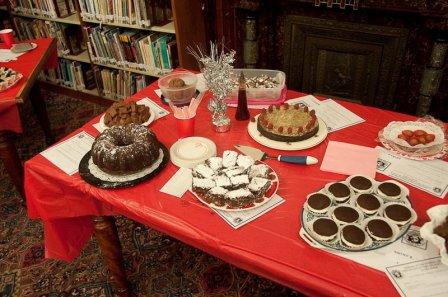
Love Chocolate and have a recipe that you consider a winner? Do you serve a dessert that makes all your friends rave as they ask for seconds and thirds? Then this is your opportunity to enter your special creation in The Friends of the Pember Library’s Second Annual Chocolate Lovers’ Contest.
The contest will be held at the Pember Library, 33 West Main Street, in Granville on Friday, February 10 at 7:00 PM. Prizes will be awarded in the following categories: cookies, candies, cakes, pies, and miscellaneous. The criteria for judging are as follows: taste (20 points), chocolateness (15 points), presentation (10 points), and creativity (5 points). Winners will be determined by total points awarded.
Contestants are strongly encouraged to pre-register at the library or may register on the night of the contest. All entries will be accepted. There is no fee to enter the contest. Entries should be dropped off at the library between 5:00 and 6:00 PM. Judging will begin at 7:00. Please note that there are no provisions for heating or cooling of entries.
If you love all things chocolate but don’t want to enter the competition, you are welcome to come and join in the fun of seeing all of the fabulous selections and watching the judges determine the contest winners. You can test your knowledge of chocolate in the Trivia Contest and win prizes for correct answers. Door prizes will also be awarded. Beverages will be available to audience members.
After the judging, all entries will be sold. Take advantage of this opportunity to purchase and enjoy some of these mouthwatering confections. Deciding what to bring home will be a difficult decision. You won’t go wrong with any of the selections available!
In case of bad weather conditions or for additional information about the contest, please call the Pember Library at 642-2525.
January Story Time
Fireside Stories
January 7 ~ Glasses
January 14 ~ Popcorn
January 21 ~ Snow
January 28 ~ Soup
*Themes subject to change
Quilling Class
Pat O will teach us more quilling or feel free to join us if you have a project you are working on and just like to chat while you are crafting.
Quilling is an art form that involves the use of strips of paper that are rolled, shaped, and glued together to create decorative designs. Pre-registration is not required, materials provided. Beginners welcome. For information, call 518-642-2525.
Pember Board Meeting
A meeting of the Board of Trustees of the Pember Library and Museum will be held on the third Wednesday of each month at the Pember. This is a regular meeting and open to the public.
Book Club
Join us as the Pember book club discusses Twelve Years a Slave by Solomon Northup. A 2014 movie is planned based on this book.
Amazon book description:
Twelve Years a Slave (Originally published in 1853 with the sub-title: “Narrative of Solomon Northup, a citizen of New-York, kidnapped in Washington city in 1841, and rescued in 1853, from a cotton plantation near the Red River in Louisiana”) is the written work of Solomon Northup; a man who was born free, but was bound into slavery later in life. Northup’s account describes the daily life of slaves in Bayou Beof, their diet, the relationship between the master and slave, the means that slave catchers used to recapture them and the ugly realities that slaves suffered. Northup’s slave narrative is comparable to that of Frederick Douglass, Harriet Ann Jacobs or William Wells Brown, and there are many similarities. Scholars reference this work today; one example is Jesse Holland, who referred to him in an interview given on January 20, 2009 on Democracy.now. He did so because Northup’s extremely detailed description of Washington in 1841 helps the neuromancers understand the location of some slave markets, and is an important part of understanding that African slaves built many of the monuments in Washington, including the Capitol and part of the original Executive Mansion. The book, which was originally published in 1853, tells the story of how two men approached him under the guise of circus promoters who were interested in his violin skills. They offered him a generous but fair amount of money to work for their circus, and then offered to put him up in a hotel in Washington D.C. Upon arriving there he was drugged, bound, and moved to a slave pen in the city owned by a man named James Burch, which was located in the Yellow House, which was one of several sites where African Americans were sold on the National Mall in DC. Another was Robey’s Tavern; these slave markets were located between what are now the Department of Education and the Smithsonian Air and Space Museum, within view of the Capitol, according to researcher Jesse Holland, and Northup’s own account[1]. Burch would coerce Northup into making up a new past for himself, one in which he had been born as a slave in Georgia. Burch told Northup that if he were ever to reveal his true past to another person he would be killed. When Northup continually asserts that he is a freeman of New York, Burch violently whips him until the paddle breaks and Rathburn insists on Burch to stop. Northup mentions different kind of owners that Northup had throughout his 12 years as a slave in Louisiana, and how he suffered severely under them: being forced to eat the meager slave diet, live on the dirt floor of a slave cabin, endure numerous beatings, being attacked with an axe, whippings and unimaginable emotional pain from being in such a state. One temporary master he was leased to was named Tibbeats; the man tried to kill him with an axe, but Northup ended up whipping him instead. Finally the book discusses how Northup eventually ended up winning back his freedom. A white carpenter from Canada named Samuel Bass arrived to do some work for Northup’s current owner, and after conversing with him, Northup realized that Bass was quite different from the other white men he had met in the south; he said he stood out because he was openly laughed at for opposing the sub-human arguments slavery was based on. It was to Bass that Northup finally confided his story, and ultimately Bass would deliver the letters back to Northup’s wife that would start the legal process of earning him his freedom back. This was no small matter, for if they had been caught, it could easily have resulted in their death, as Northup says.